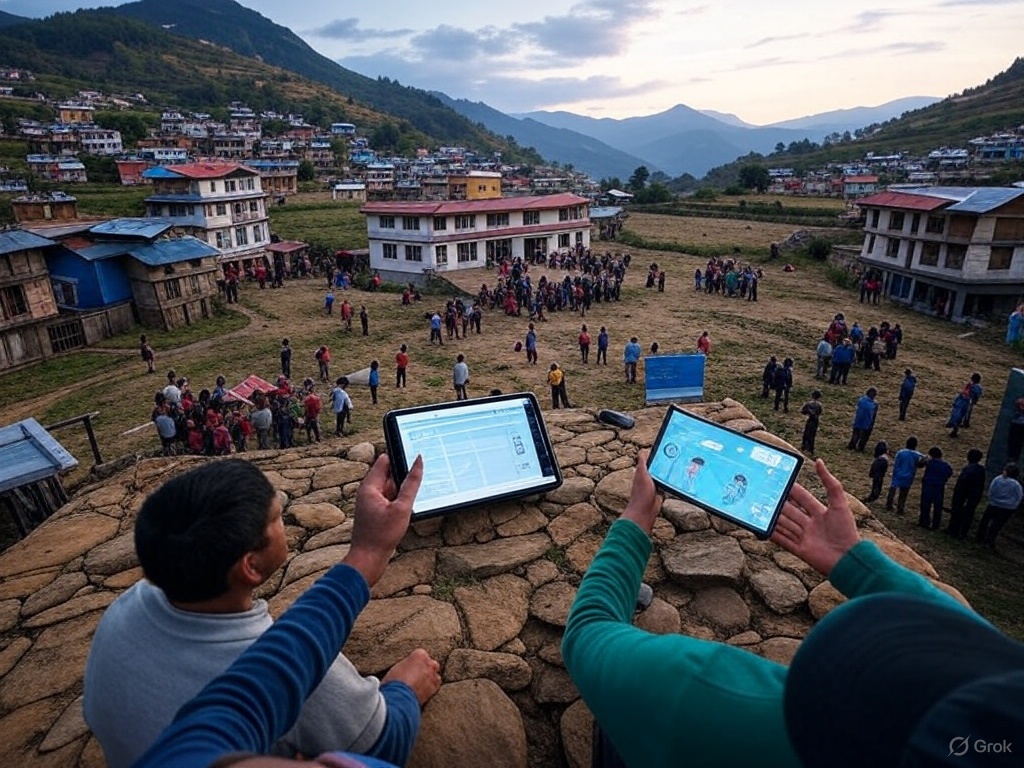
The Role of AI and Machine Learning in Transforming Rural Nepal
# The Role of AI and Machine Learning in Transforming Rural Nepal
Introduction
Nepal's rural regions, home to 80% of its population (World Bank, 2023), grapple with systemic challenges: 28.6% poverty rates (National Planning Commission, 2022), inadequate healthcare (1 doctor per 1,500 people in rural areas), and agricultural inefficiencies. However, AI and ML are emerging as tools to bridge these gaps. With 94% mobile penetration (Nepal Telecommunications Authority, 2023) and growing tech innovation, rural Nepal stands on the cusp of a digital revolution.
AI in Agriculture: Boosting Productivity
Agriculture employs 66% of Nepal's workforce (FAO, 2022) but contributes only 27% to GDP, reflecting inefficiencies. Precision Farming pilot projects in Kavre District using AI-driven soil sensors increased yields by 32% (ICIMOD, 2021). ML models from Practical Action Nepal reduced crop losses by 40% in monsoon-dependent regions by providing 72-hour rainfall forecasts.
#
Pest Management
An AI app developed by FarmDrive Africa (adapted for Nepal) cut pesticide use by 25% through early infestation detection (CIMMYT, 2022). Nepal loses $150 million annually to post-harvest waste (UNDP, 2021). AI-powered cold chain solutions could recover 30% of these losses, significantly improving farmer incomes and food security.
AI in Healthcare: Saving Lives Remotely
Rural Nepal faces a 65% shortage of healthcare workers (WHO, 2023). AI offers scalable solutions to this critical gap. The Mero Doctor app, deployed in Karnali Province, conducted 50,000 remote consultations in 2022, reducing clinic visits by 45% (Ministry of Health, Nepal).
ML models analyzing climate data in Chitwan predicted dengue outbreaks with 89% accuracy (PLOS Neglected Tropical Diseases, 2023). AI wearables in Rupandehi lowered maternal mortality by 22% by alerting midwives to high-risk pregnancies (UNICEF, 2022). AI-assisted TB diagnosis via X-rays in rural clinics reduced detection time from 3 weeks to 48 hours (PATH Nepal, 2023), demonstrating how technology can overcome infrastructure limitations.
AI in Education: Bridging the Literacy Gap
Rural Nepal's net school attendance rate is 76% (UNESCO, 2022), with 1 teacher per 34 students. AI-driven tools are reshaping this educational landscape. The OLE Nepal project provided 12,000 tablets with offline AI tutors, improving math scores by 28% in Gorkha District.
An ML model by Kathmandu University translated STEM content into 7 local languages, boosting enrollment among marginalized groups by 18%. AI-powered apps increased digital literacy rates by 40% among rural women (World Economic Forum, 2023), creating new economic opportunities and social mobility.
AI in Rural Development: Building Resilient Communities
ML landslide prediction systems in Sindhupalchowk achieved 82% accuracy, saving 300+ lives during 2022 monsoons (ICIMOD). AI chatbots by NMB Bank enabled 200,000 rural users to access microloans via SMS (Nepal Rastra Bank, 2023), democratizing financial services.
AI-optimized microgrids in Humla cut electricity costs by 60% using solar/wind forecasting (Alternative Energy Promotion Centre, Nepal). These applications demonstrate how AI can address fundamental infrastructure challenges while building community resilience against natural disasters and economic shocks.
Challenges and Solutions
Despite promising results, significant challenges remain. Only 35% of rural Nepal has internet access (ITU, 2023). Nepal's Digital Nepal Framework aims to address this by expanding 4G coverage to 90% by 2025. AI hardware remains unaffordable for 60% of farmers (FAO), but subsidized "AI kits" with solar-powered sensors (e.g., SunFarmer Nepal) are making technology more accessible.
Digital literacy is another barrier, with 68% of rural adults lacking tech skills (UNDP). Grassroots training by NGOs like Code for Nepal is helping bridge this gap through community-based education programs tailored to local needs and contexts.
Conclusion
From cutting farm losses to saving lives and educating marginalized communities, AI and ML are rewriting rural Nepal's story. With strategic investments and partnerships—such as Nepal's collaboration with Google's AI for Social Good—the nation can achieve its Sustainable Development Goals (SDGs) a decade faster (World Bank). The future is not just digital; it's equitable.