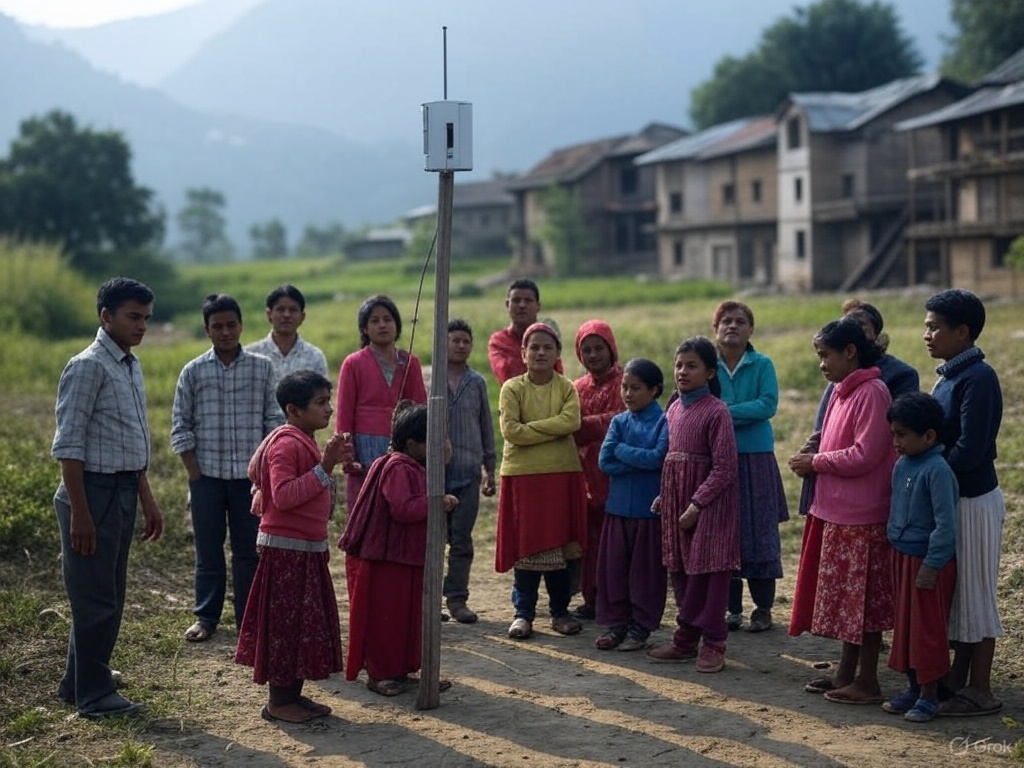
Li-Fi Technology: The Future of Wireless Communication in Rural Nepal
# Li-Fi Technology: The Future of Wireless Communication in Rural Nepal
Introduction
In the rugged terrain of Nepal's Karnali region, internet connectivity remains a significant challenge. Traditional wireless technologies like Wi-Fi and cellular networks struggle with the mountainous landscape, limited infrastructure, and power constraints. However, an emerging technology called Li-Fi (Light Fidelity) offers promising solutions to these challenges.
What is Li-Fi?
Li-Fi uses visible light communication (VLC) to transmit data, essentially turning LED light bulbs into wireless transmitters. Unlike Wi-Fi which uses radio waves, Li-Fi modulates the intensity of LED lights at speeds imperceptible to the human eye to transmit data.
Key characteristics of Li-Fi include:
- High Speed: Theoretical speeds up to 224 gigabits per second
- Security: Light cannot penetrate walls, making the network inherently more secure
- No Electromagnetic Interference: Can be used in sensitive environments like hospitals
Feasibility in Rural Karnali
Our research at Mid-West University is examining how Li-Fi technology can be adapted for rural Karnali, particularly in Jumla. Several factors make Li-Fi particularly suitable for this region:
#
Solar Potential
Karnali receives abundant sunlight throughout most of the year. Solar-powered LED systems can provide both lighting and data transmission, addressing two critical needs simultaneously.
#
Last-Mile Connectivity
While fiber optic infrastructure remains limited, where it does reach, Li-Fi can extend connectivity from these points to surrounding communities using existing or new lighting infrastructure.
#
Cost Efficiency
Retrofitting existing LED lighting systems for Li-Fi capability is potentially more cost-effective than installing new cellular towers or extensive fiber networks in challenging terrain.
#
Resilience
Decentralized Li-Fi networks could be more resilient to natural disasters like landslides and earthquakes that frequently damage physical infrastructure in the region.
Implementation Challenges
Despite its promise, several challenges must be addressed:
- Line of Sight Requirements: Li-Fi requires direct line of sight between transmitter and receiver
- Limited Range: Effective range is currently shorter than Wi-Fi
- Ambient Light Interference: Performance can be affected by sunlight and other light sources
Our Research Project
Our current research project, "Next-Gen Communication Network Li-Fi Technology and its Feasibility Study in Rural Areas of Karnali-Jumla," is addressing these challenges through:
- Field testing of Li-Fi systems adapted for rural environments
- Development of hybrid Li-Fi/Wi-Fi solutions that leverage the strengths of both technologies
- Creating low-cost, solar-powered Li-Fi transmitters suitable for remote locations
Looking Forward
The digital divide remains one of the most significant barriers to development in rural Nepal. By pioneering the application of Li-Fi technology in these challenging environments, we aim to create a model for sustainable, affordable connectivity that can be replicated across similar regions worldwide.
As this research progresses, we invite collaboration from technology partners, development organizations, and government agencies interested in innovative solutions for rural connectivity.