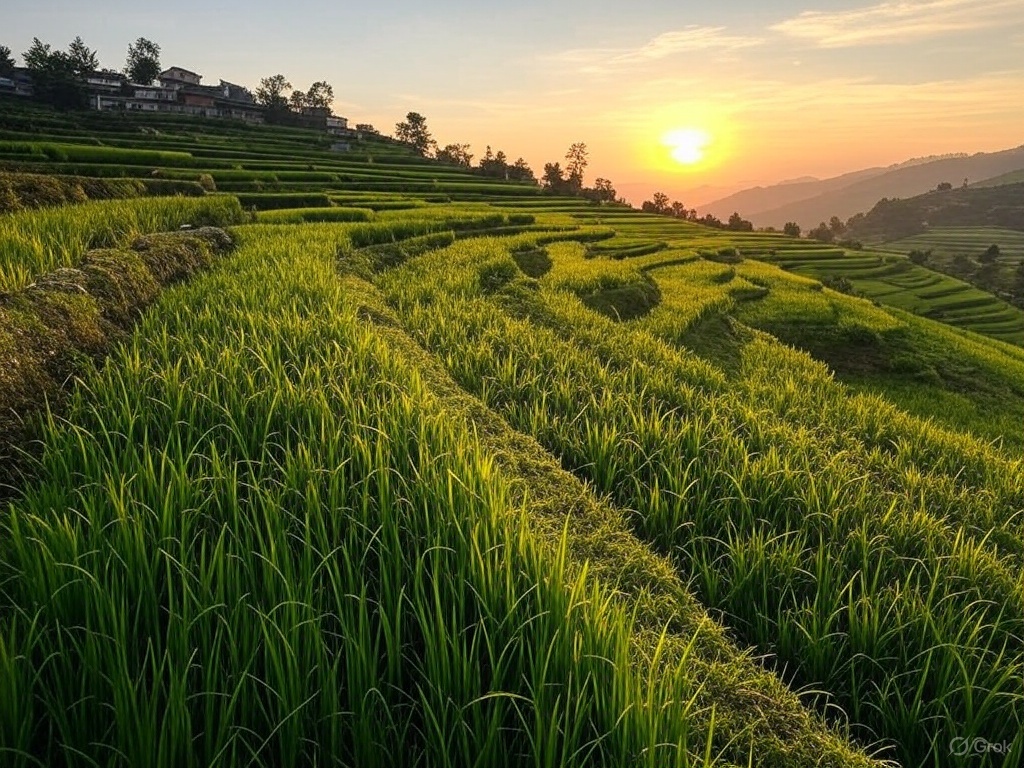
Marsi Rice: The World's Highest Cultivated Rice
# Marsi Rice: The World's Highest Cultivated Rice
Introduction
At an elevation of over 3000 meters in the pristine Jumla Tsum Valley Patarasi of Nepal, a remarkable agricultural achievement takes place each year. Here, local farmers cultivate Marsi Rice, what is recognized as the world's highest grown rice variety.
A Unique Growing Environment
The extreme altitude creates a distinctive growing environment that imparts special characteristics to the rice:
- Pure Mountain Water: Irrigated with pristine glacial meltwater
- Temperature Variations: Significant day-night temperature differences enhance flavor development
- Mineral-Rich Soil: Volcanic soil provides exceptional nutrient content
Traditional Farming Methods
What makes Marsi Rice truly special is not just where it grows, but how it's grown. Local farmers maintain traditional agricultural practices that have been passed down through generations:
- No Chemical Inputs: Completely free from pesticides, herbicides, and synthetic fertilizers
- Manual Cultivation: Hand-planting and harvesting preserves soil health
- Terraced Farming: Ancient terracing techniques prevent erosion and maximize limited arable land
Nutritional Excellence
Laboratory analysis of Marsi Rice reveals an impressive nutritional profile:
- Higher protein content compared to conventional rice varieties
- Rich in essential minerals including magnesium, zinc, and selenium
- Contains antioxidants that develop as a response to the harsh growing conditions
Supporting Mountain Communities
Beyond its exceptional quality, Marsi Rice represents a vital economic lifeline for remote mountain communities:
- Provides sustainable income for over 300 partner farmers
- Preserves traditional agricultural knowledge and cultural practices
- Creates economic incentives to maintain terraced landscapes that prevent erosion
The Future of Marsi Rice
As climate change threatens agricultural systems worldwide, high-altitude farming may become increasingly important. The genetic traits that allow Marsi Rice to thrive in extreme conditions could prove valuable for developing climate-resilient crop varieties.
Through Lekali Karesa Group, we're working to:
- Expand market access for Marsi Rice farmers
- Document and preserve traditional farming techniques
- Conduct research on the unique properties of high-altitude crops
By choosing Marsi Rice, consumers not only experience an exceptional culinary product but also support sustainable mountain agriculture and the preservation of Nepal's agricultural heritage.